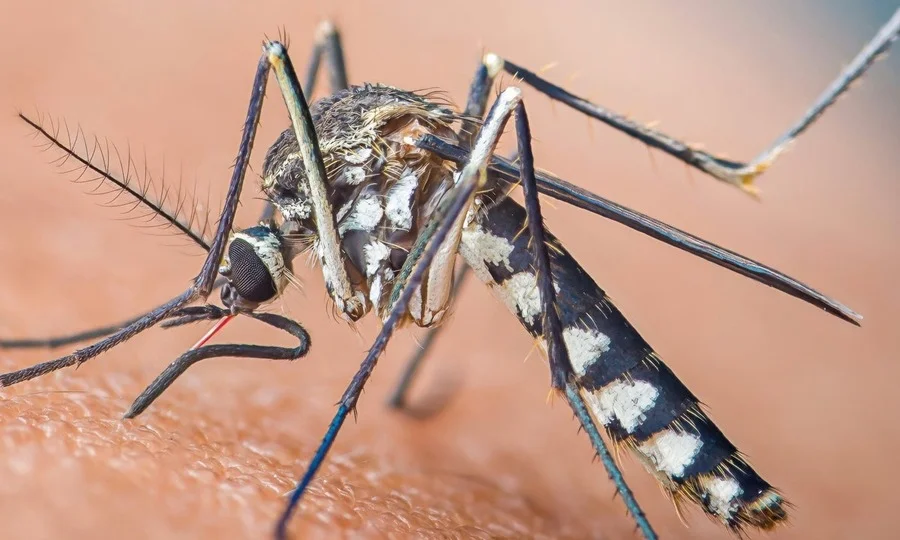
The discovery of invasive mosquitoes UK has prompted heightened health surveillance in East London. *Aedes aegypti*, an invasive mosquito species, was found breeding in residential areas. Specifically, adult insects and larvae were identified, prompting swift action by the UK Health Security Agency (UKHSA).
These particular invasive mosquitoes UK are infamous carriers of diseases such as Zika, dengue, and chikungunya viruses. These illnesses are typically prevalent in tropical and subtropical climates worldwide. While many cases present mild symptoms, some individuals do require hospitalisation following infection.
Despite the finding, health officials stress that the risk to the public is low. The UK’s colder climate generally prevents *Aedes aegypti* mosquitoes from establishing long-term populations. Control measures are now actively in place to eliminate the detected larvae.
Experts explain why the risk of disease transmission is minimal. Professor Heather Ferguson from the University of Glasgow noted that extensive numbers of mosquitoes are needed. Moreover, prolonged warm temperatures would be necessary for efficient virus transmission. These mosquitoes would first need to bite individuals already infected with diseases, likely acquired overseas.
Dr. David Weetman, a Reader in Vector Biology, elaborated on the low probability. He highlighted that only a very small fraction of mosquitoes carry these viral diseases. Therefore, the chance of finding an infected mosquito is exceedingly low. Even then, the probability of it carrying a transmissible viral dose is very remote.
For individuals concerned about recent mosquito bites, experts advise against worry. The likelihood of contracting a tropical disease from a bite within the UK is extremely remote. Native mosquito species, numbering at least 20, are a natural part of the UK’s ecosystems and generally pose no such threat.
Looking ahead, climate change and global travel could introduce more invasive mosquito species. For example, the “tiger mosquito,” *Aedes albopictus*, is a significant concern. This related species is more cold-tolerant and is spreading across continental Europe. It has already caused recent dengue and chikungunya outbreaks in countries like France and Italy. Dr. Steven White, a Theoretical Ecologist, suggests it is likely to try establishing itself in the UK soon.